
Interview with Bernard Seals
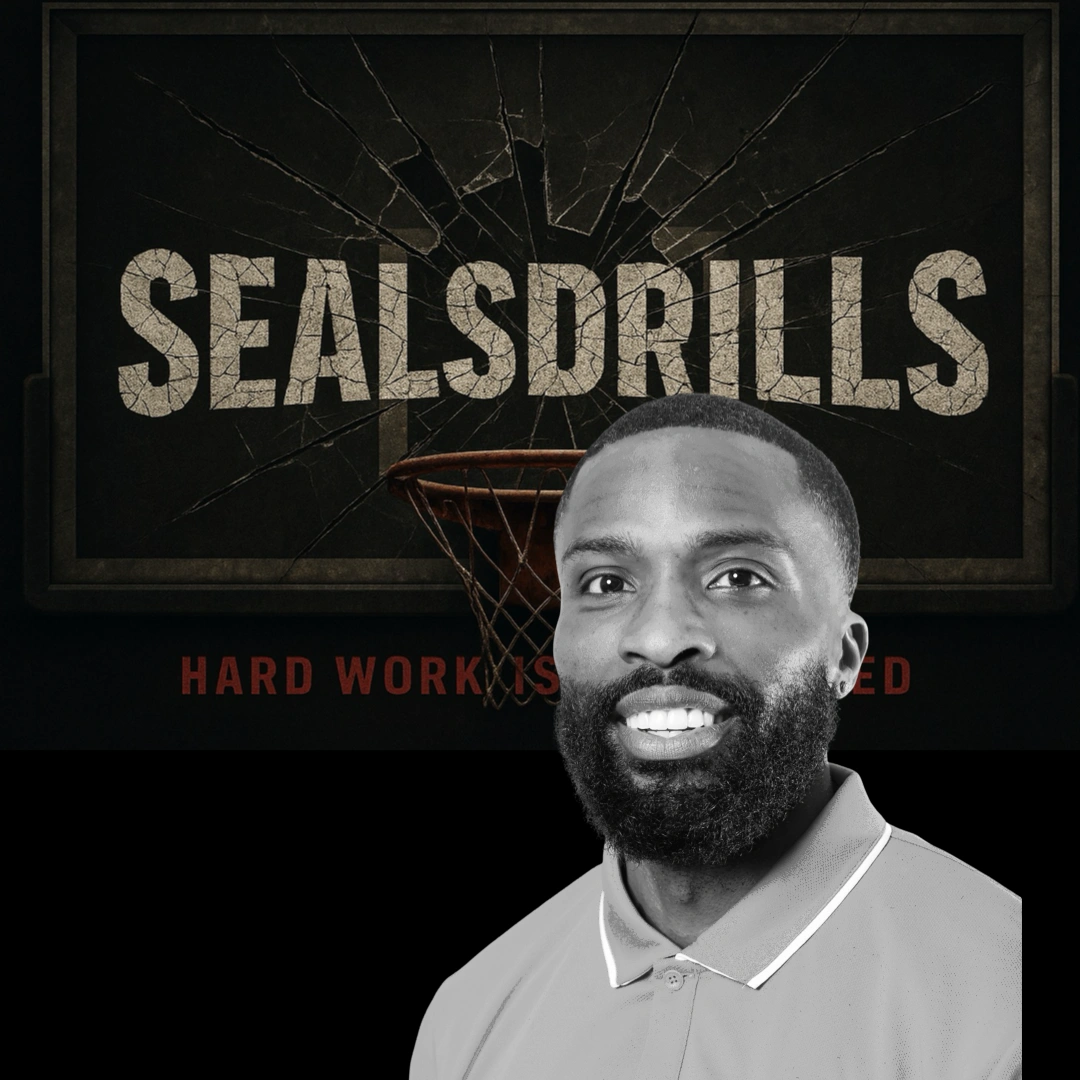
Topic: The main difference between athletes who make it to the next level and those who don’t.
Guest Name: Bernard Seals
Guest Credentials: Bernard Seals played basketball at the JC level all the way to D1. He is a college assistant coach and the owner of Seal Drills Academy, a basketball training academy.
Discussion Details: This conversation highlights Bernard Seals’ basketball skills training business, Seal Drills Academy. It also covers common injuries athletes deal with, the difference between athletes who make it to the next level and those who don’t, and the best age to start strength and conditioning.
Benefits of Watching: Learn what it takes to make it to the next level as an athlete, what you may be missing that could elevate your game, and how to keep your body healthy overall.
Address of Guests Business: IG: @sealsdrill
Bernard Seals: Um, you know, it’s the the way the business started was organically. Like, um, honestly, in in 2020, you know, I’ve said it a few other times, I was like, uh, let me try to get back into the league or something. Let me just get in shape and see if I can make it toward that Achilles. Y um, and after tearing the Achilles, going to the gym, so many times people approach me like, “Man, you should train as, you know, basketball is something you could be good at. You used to do it with us back in the days.” And so it just kind of I I was in the gym at 24-Hour Fitness and somebody was in there and I’m like, “Hey yo, try this blah blah blah.” You know, and then the next day they came back like, “No, Seals, that really that really worked.” And it made sense. And so I’m just like, “Okay.” And then it just kind of went from there. Dennis at the time had his own little facility and and things like that. So I just hit him and was like, “Man, let me try this out. Let me see what’s going on. Let me Nobody was using this gym on Sunday, so I was like, “Let me get in there on this Sunday and see what I can do.” And it just everything just came naturally, you know what I mean? And it just took off from there.
Janae Young: For sure. And so I know just from watching your videos and your your uh clientele is from like middle school all the way to the collegiate level or pro. So like what do you feel like the the um biggest difference between your focus with the middle schoolers and your focus with like the older kids that are trying to make it to the next level and stuff?
Bernard Seals: to in my opinion, to be honest, which is probably gonna sound crazy, but I think the focus on fundamentals for for the the middle school kids and older kids is is the biggest because I feel like this this generation, this group of of older kids,
Janae Young: Yeah.
Bernard Seals: they lack fundamentals. Like they like don’t get me wrong, they can hoop, they’re nice, but they’re missing a lot of the fundamentals that can help them be more successful. it it’s in the middle school kids that’s the time that they need to develop that’s the time they really need these fundamentals and things like that and so there’s not much of a difference as far as the on the court basketball training the the demand I believe that that demand should be the same because they’re they’re being prepared the middle school kids to get to these levels that these other older kids that are already coming to me that’s the level they’re trying to get to so you need to experience that same fire
Janae Young: I think it’s cool too cuz some of your trainings you’ll have like those kids in the same like group, you know what I’m saying? So, I think that’s like like when the kids are looking up to like, oh, I’m doing the same drills so and so is doing and I look up to them. So, I think that’s pretty dope. Um, but what do you think separates the kids that make it to the next level and don’t? Like, what do you think the missing factor is between the ones you see succeed and the ones that like fall through the cracks?
Bernard Seals: So you you you have to obviously have some type of skill set to play at that level, whatever that next level is. Let’s just assume you have that skill set to play there. From middle school to high school, high school to college, college to pro, right? Um why a lot of them don’t make it boils down to their work ethic. Yep. Their work ethic, right? Like the the the the strength and conditioning, the the sacrifices with their diet, which isn’t easy being young. I get all that. But the sacrifices to their diet, the sacrifices to the I’m maybe I’m not going to this party. I’m at the gym putting in the work. You know what I mean? Those types of things that that that’s the difference maker. The people that are really OD about it and that that are willing to sacrifice the fun now for the future and they they get what what they deserve. The game rewards them on top of that too. You know what I mean? You know how to you put the work in. The game will find a way to reward you.
Janae Young: For sure. For sure. I remember when I was in high school, like I didn’t even go to my first like party until like junior year, almost senior. And that was cuz it was like a 16th birthday party or something. And that was my like first party. Before that, I was like so locked in on what I was doing that like that was a distraction. The kids these days I feel like are a little less focused. So it’s like they just kind of like, oh, I could do both and I, you know, whatever the case is. So I remember just different uh and then I would associate like maybe some of my teammates in high school that were out doing those things.
Bernard Seals: just happened to not be that good. So then I associated with like maybe it had nothing to do with that, but I was like, that’s what you felt, right?
Janae Young: Yeah. I said, I’m not going to do that cuz I want to be locked in. But yeah, for sure. Um, okay. So, where do you feel like most athletes are underprepared physically? the ones your athletes or maybe ones you’ve seen. Like where can performance trainers step their game up and like make sure we’re including in our stuff to make sure they’re ready to do on the court stuff and their core core stuff.
Bernard Seals: Yeah. Their core stability, you know what I mean? Yep. Their core for the balance, the explosion and not just when and you’re going to say duh when I say this, right? But when I say their core, I’m not just talking about their abdominal muscles. You know what I mean? like their entire core.
Janae Young: Yeah.
Bernard Seals: It’s the it’s the center of everything. Like it’s so vital. It it it’s so vital that like I really truly believe if you get that to be the strongest, it makes it that much more easier to build everything else around it.
Janae Young: Yeah. Yeah. And I always bring up core when it comes to just um preventing injury. Like I don’t see it as much in the guys game, but in the girls game, I mean, every time they go to the basket, they’re not landing on their feet for sure. Whether it’s because they’re trying to get the call, right? And so that’s a whole different argument, but nonetheless, like they go to the body, flail their bodies back, and all of that to me is lack of control and they’re falling hard and every time I’m like cringing because I’m like, that’s an injury. That’s an injury with and self-inflicted though. like you could have just landed on two feet, but you’re either worried about getting a call or whatever the case you’re trying to I’m not sure or you just don’t have stability or you can’t land on two feet. So, for me, the core in working on that in different um basketball positions is where I’m like, “Okay, we we’re not doing abs, we’re not doing planks, we’re going to do like movements potentially with a med ball or Yeah. Yeah. So, that you know when you get to the rim, you can get contact and still finish strong, you know? Like that’s the biggest thing for me when it comes to core is preventing injuries, not only just finishing at the rim. You know what I’m saying? Um, what do you notice as far as like reoccurring injuries or most common injuries um in basketball from like just your experience, whether it’s yourself or just athletes you’ve seen that like keep hurting the same thing?
Bernard Seals: Hammies. Okay. Hamstring strains. Like I I mean I haven’t seen too many athletes tear or any you know no tears or anything like that but I see a lot of strains a lot of strains in the hamstrings the hips the groins and obviously it’s something with that mobility that ties into the core you know what I mean like you said the rotational movements the the explosion um those areas I for sure see a lot like I see a lot of guys having to sit out of practice just because of soreness or tightness. Yeah. Um, in those areas for sure.
Janae Young: And do you think athletes, we kind of probably already kind of addressed this, but do you think athletes work on their bodies enough outside of just skill work? Like how many athletes are really like whether it’s their own personal performance trainer or if it’s just going to the gym on their own. Like I know it’s I mean at this rate ChatGPT could probably build you a really good basic training program, right? You don’t even they use it for everything else, right? go ahead and make you a program and just get to it. At least do something. You know what I’m saying? But like do you feel like say we had to use a percentage of high school athletes what percentage of those athletes you think are actually doing work like on their own, not skill work, not on the
Bernard Seals: No. Right. Right. Yeah. Um I’m going to I’m gonna say 45%. Yeah. I’ll say 45% generously. Yeah. No, generously. Right. And I’m going to I’m going to say 45% and generously because the amount of parents that are involved right now that are showing the strength and conditioning and that understand it to an extent, right? That to an extent.
Janae Young: Yeah. Cuz these high school kids now are pretty much like our age kids. So like most of our generation kids are either in middle school or high school right now for the most part. So, um, because we I think our generation compared to like like our parents generation, like we kind of just know a little bit more as it should be. Um, so we’re like pushing the kids like you got to do this, you got to do that. And then I think social media also helps. Like we didn’t have social media, so we didn’t really know like what the best players were doing. We didn’t have these videos of the workouts LeBron was doing, like, you know, things like that. So, I think uh that’s a big thing that we were missing. So, now there’s just no excuse these days, I think. Right. It’s just like you have so much access to whatever workouts. You can probably type in something and figure out a whole explosion workout on your own, you know, and probably get results.
Bernard Seals: So, I agree. Like don’t get me wrong, I 100% agree with what you just said, everything you just said, but let me I just recently kind of come to an understanding as to and I’m not making any excuses for this generation or these athletes, but I kind of understand why they don’t as much. The world is different. Yeah. You know what I mean? If you think about when we were coming up, you you were told to just go outside and play and go play and disappear. And there wasn’t no GPS or no watch on you. Yeah. You know what I mean? Just because even though the world was still the world at that time and a lot of stuff could happen. It wasn’t what it is today. And so with them having the social media and and things of that nature on top of that, they’re not out do they’re not going to do that. So it’s it’s kind of um more of a responsibility on us as mentors, as teachers of this sport or in this industry to show them. So that’s why those those in this generation who trust me, whether it’s the parents or athletes, I take them through the from A to Z. We going to play basketball with the noonballers. We going to go lift weights. We about to talk about what you ate the other day, but we going to sit here and talk about how we just hooped for five games, right? And teach them this type of stuff. Like like I had a group of guys who literally didn’t know how to play the game 21. Okay. No, but literally but like was wasn’t going to teach them playing oblivious wasn’t nothing, right? And we just literally go through play the game of 21. I’m able to explain to them, you know, how this kind of translates to isolation basketball and and things of that nature. And they’re just like mind blown. And for us, we’re like, what?
Janae Young: Been playing open gym and doing 21 and all that stuff. Yeah,
Bernard Seals: but that’s why I feel like what you said is 100% true and I agree, but that’s why it’s more of a responsibility on us to get them to do it and they’ll do it. They’ll start to do it. Especially if it’s coming from mentors. Facts.
Janae Young: I think when it’s coming from their parents, it’s like a job.
Bernard Seals: Yeah. That’s still the parent.
Janae Young: Yeah. Yeah. It’s just still their parents. The parents ain’t never right. Even if they’ve done it and went, they could have the parent could have played pro. They still are like, you don’t know what you’re talking about. You know what I’m saying? And we could say the I’m talking about word for word and they’ll be like okay yeah that makes sense. I’ll be like okay. So for me I’ll as mentors too like whether it’s performance rehab whatever like I’ll make sure I have conversations with the parents a little bit like okay what is your agenda and if it lines up with me and I’m like and if I’m okay with whatever it is I’m like good I’ll push that then whatever you need me to you know what I’m saying to connect with your kid or whatever case.
Bernard Seals: Yeah. Yeah. That’s that’s why that’s why that’s why with me it’s like no let’s don’t just come to me because your friend comes to me and all that like let’s make sure this is a good fit and a good relationship. You know what I mean? Because I’m not I’m not in it just like here we go talking about just for the money. Obviously we know we need it right to survive but like I want to really make help make a difference. You know what I mean? And help this young person succeed. So let’s all be on the same page. You know what I mean?
Janae Young: And there’s actually so many lessons I think um training is one thing, but just the sport in general that we’re helping them get better at. Um it’s bigger than soccer, basketball, whatever the sport is. There’s just so many lessons that you learn in sports. Like number one, just you may not like all your teammates and you still have to like or your coach. You may not like your coach, right? And you still have to learn how to survive and get kind of what you want out of the situation, right? And that’s life. Like you’re not going to like your boss, but you got to get that check.
Bernard Seals: Get you fired. Yeah.
Janae Young: So it’s like you might have to play the system a little bit, but I think you learn that and then you learn in general. Um I think cattiness and with girls are a little worse than guys, but learning how to navigate multiple personalities, right? Like that’s real world experience. It’s like if you can handle a team with 15 girls and 15 different personalities, you can navigate life.
Bernard Seals: You know, it’s crazy in in regards to that. Like the same time around the same time that I started the business and got into coaching, I actually became a supervisor in corporate America at that time. First time in corporate America as well, being a leader in that sense. Boy, I tell you, corporate America different. Boy, I tell you. I said, “Okay, it made but it it it helped everything. Like everything to this day makes sense, but I’m like, you got to deal with some stuff. You got to put a few different hats on. You got to crack some smiles when you like, oh my goodness, are you serious right now?” And it it but but basketball helps with that in those types of situations when you face adversity. How you going to respond? You know what I mean? You don’t want to get up and go run that mile or go deal with coach in the morning, but you got to get up and go to work, right? You can’t just be like, I’m not going like, you know,
Janae Young: and that’s where this ain’t even on topic with was for today, but the kind of dealing with adversity and stuff brings me to the transfer portal. Oh my goodness. Like that to me, I think there needs to be some more regulations to it. I think the flexibility to do what you want to do and go where you want to go is great for athletes, but I think the ability to just jump ship every year if you want to and no penalty with it. Yeah. I’m like, so how do you deal with adversity? Now, if it’s something that’s like something was really going wrong, like the coach was abusive or whatever the case is, right? Something was really just not right, then I get it. You got to get out of there, right? But there’s no way that’s the case at three different schools in a row. At that point, now I’m asking, am I the problem? Because there’s no way these three different coaches are all treating me bad and abusive and you know, whatever.
Bernard Seals: You’re you’re asking yourself that if you have the ability to be accountable. Yeah. A lot of a lot of So, so like here’s my thing and I think my answer a lot of people don’t expect this answer and I get it. It is what it is. But like run run run. If if if that’s who you are, if that’s your makeup. Yeah. And you have to run to try to find success. What you’re going to eventually find out is you’re going to run out of time.
Janae Young: So you’re just going to basically you’re saying let them learn the lesson.
Bernard Seals: It be some people some people are who they are. Yeah. You know what I mean? Some people are who they are. Some people don’t possess the ability to hold themselves accountable until they experience what it is you’re trying to help them. not experienced. Yeah. You feel me? Yeah. Like and and like that part they got to learn the hard way.
Janae Young: Yeah.
Bernard Seals: Like that part of because being a person that had to learn the hard way, you know what I mean? Who who who knowingly had the ability to not experience what I did. Yeah. I can recognize somebody who knows what they can be doing but chooses not to. And so it’s like, bro, listen, we ain’t even going to stress each other out. Yeah. I’m not even going to work that hard.
Janae Young: Yeah.
Bernard Seals: I’m not going to let you drown. Like, you know what I mean? Like there’s never be like, “Oh, drown.” Like, but you’re you have to let that head go below the water. I know you. I I’ve been you. You know what I mean? And and as far as the transfer portal itself, it goes, sooner or later, you run out of time. You may not find another situation. Now, life’s going to hit you. And now you’re really going to have to find accountability. Yeah. And hopefully that changes your path. You know what I mean? And then those people that were in your corner will still be there and give you that same advice that you could have applied back then.
Janae Young: Yeah. Yeah. So go ahead. Why wild west? Wild west. And now it is a little tougher too with with the money now that we can get paid. Some people are just running for a check like check to check it. They had nothing wrong. They was starting. They was playing. They was the coach was great. They going to pay me a little more. You know what I’m saying? So I get now it’s busy.
Bernard Seals: I may not really love this. I may not really love this. We talk about how it becomes a business. So, and at work, I don’t love going to work, but I’m going to work to get my check. So, if this is something that I can do, it’s a it like I’m not It’s something that where I can get me some money for the next 3 to four years, and you just need me to do this because I know that after these three or four years, I’m not doing this no more. Get the bag.
Janae Young: Yeah.
Bernard Seals: You see what I’m saying? And get your education paid for and if you’re being a good person, you’re upfront. you not running around here like you run the world a jerk and cuz you got a couple million and Right. Right. I understand it.
Janae Young: Yeah. Yeah. Cuz now it’s a business. It does change things. Before I just really felt like Okay. For example, if you’re a freshman and you go pretty high level D1, expecting to just like play hella minutes is kind of like a little bit like come on. You got to kind of earn your
Bernard Seals: you reaching.
Janae Young: So then when you’re transferring cuz you didn’t play that to me is like you should go Yeah. Then if you want to play right away you might need to go down a level even if it’s still D1 but like come down. There’s a reason you’re not playing.
Bernard Seals: Ain’t no coach. It don’t matter if you a freshman sophomore. If you coming and you hooping you doing everything that you supposed to be productive you going to get the time that you earn.
Janae Young: Yeah.
Bernard Seals: I mean come on what coach like you going to get the time that you earn. But if you pouting, you sulking, you got to be a baby about it. We got to uplift you to get you going, then you probably going to stay where you at. Cuz to me, you ain’t ready.
Janae Young: Yeah, for sure. For sure. And then let me circle back. Uh so we’ve had a lot of athletes we work with with me on the perform uh physical therapy side and you doing the basketball stuff. Um how do you handle athletes that are that you know are coming back from injury? um and modifying kind of like their training to make sure it’s within the parameters of what they’re able to do.
Bernard Seals: First of all, whatever you provide, that’s what I’m going whatever parameters you provide, right, as the physical therapist to me as the trainer, I’m going to stay in your parameters. And that’s from from A to Z. You know what I mean? And so every drill that I’m going to come up with for the athlete is going to be one that is permissible per your recommendations because that’s your expertise, right? And that’s where I think a lot of these people get things confused and like their ego gets in the way because if we’re all in this to help the athlete and someone else is a subject matter expert, Yeah. they’re not just like bossing you around. This we’re a team at the end of the day. team, team athlete. If a parent trusts me to get them back on the court and they trust you to diagnose everything, why do I think I’m that much better? Like, I ain’t got to listen to you. You got a doctorate. What is that? Like, like it just doesn’t make sense. But that’s exactly how I bring them back. Whatever. I need that recommendation for sure.
Janae Young: And that’s where too I think and why I kind of started the podcast anyway of just getting people on the same page and everybody has their own lane and depending on where the athlete is, there’s a a priority in a certain lane. Like if somebody, for example, we’re talking about ACL and it’s the first 3 months, I’m probably the driver of what’s going on. And then I’m like, “All right, they can do this, this, and this.” And then at some point, maybe they’re like seven or eight months out and they’re getting ready to get back on the court. You are now kind of taken over a little bit. They’ve kind of got checked off on the things they can do. Now it’s your job to get them back into like basketball shape and like whatever. So I think the biggest thing is knowing where the athlete is in the process because it is a team thing. Even when you’re in college, you have like your physical therapist, your athletic trainer, your skills coach, and your strength and conditioning coach. you have four different people trying to work for your best interest, right? And at any point in season, somebody’s the head person. And even the even if the person’s not injured, if it is off season, the strength and conditioning coach should probably have the hat. When it gets between November to February, strength and conditioning has to kind of fall back a little bit and understand what games are happening and how much load is happening. Now I got to adjust.
Bernard Seals: You get directors from the head coach.
Janae Young: Correct. And then the trainer, you know, everybody understand, they got like you got the next shift. You know what I’m saying? That’s when like I feel like true unison and like what’s best for the athlete like kind of comes full circle.
Bernard Seals: But here’s the thing. It it it it goes back to, okay, let’s accept the culture for what it is. There’s a lot of imposters, right? Because if you’ve came up in any type of sports environment on any type of team that’s extremely easy to understand. Yeah. You you don’t understand that if you came up in this type of environment if you’re egotistical, right? Like so we do have some people who are that in our industry, right? But a lot of these people infiltrated this industry for the hustle part of it, for the money part of it. And so they don’t even understand those aspects. That’s why everybody who can help each other and who should be a part of a team, that’s why they they conquer everybody.
Janae Young: Yeah. Yeah. They don’t even know. Yeah, for sure. And then uh overall though, um obviously you have these multiple hats and people you might like kind of refer out to for whatever it is. Um what do you look for professionally or like business-wise on people that you are referring people out to? So, I know obviously you’ve sent people to me, but why like why me? There’s other sports PTs in the area that maybe you know or whatever. Like, what are you looking for specifically for your athletes to vouch from?
Bernard Seals: Um, to be honest with you, man, and I I think I I like think of my kids like where would I send my kids when I’m looking at my athletes, right? And it’s like, okay, do you know what it is that you’re talking about? Y, all right, let me fact check that. I may not know it but let me I know how to do my research and I can go easy these days educate myself I can you can really teach yourself a lot of stuff just with with this internet and everything else. So okay once you pass all those checks the final check is the hardest check and it’s probably the the realest probably what people don’t don’t understand is I can’t feel like you’re a weirdo. Yeah. You know what I mean? Like weird Yeah. Yeah. You know what I mean? like I can’t send an athlete to you and you’re over here talking about my head coach or you’re over here oh you shouldn’t go here you that type of stuff you know what I mean it’s like unfortunately there are weirdos that have infiltrated as well and so it’s like if you if you’re not a cool person a genuine person if I don’t get that energy from you I’ll stay away from you I’m I won’t hate on you or nothing like that or or have a problem with you but I stay away but know what you’re doing Be professional. I don’t call. I don’t ask you for no discount. I don’t say what’s up. No. Okay. Be professional. I expect to be treated as a client. You know what I mean? When we do business as well, and I’ll make sure I uphold my end and as long as we’re able to do that and continue to build, that’s how things grow. You know what I mean?
Janae Young: I’m glad you brought that up cuz in business, you know, too, I’m sure. And sometimes when you’re in situations where you know the kid is in a situation, you’re kind of like, “Okay, let me give them a discount. I know their family situation or like I’m trying to help out. But like on the regular like realistically the people I connect with, they end up feeling like even my athletes to patients or whatever feeling like family or we feel cool, right? So if I gave a discount to everybody that felt like we was cool, then I might as well just lower my price cuz then it’s going to be everybody. You know what I’m saying? So, I feel sometimes I’m like I try to do my best to like if if say somebody’s been consistent and then a parent loses the job and you’re like, “All right, let me try to Yeah. Yeah. You know what I’m saying? Cuz we’ve been consistent and stuff.” But yeah, it is it is tough where it’s like, “All right, what’s the player discount?” I’m like, “Everybody is like I’m cool with everybody.” You know what I’m saying? So, it is hard sometimes like we got to keep these lights on.
Bernard Seals: I mean, I had to cap it because like, you know, obviously I’m I’m on the coaching staff, so I do obviously player development stuff with the team and everything else. There was time periods where it’s not with the team and so it was with me, but they’re still your coach. It’s supposed to be free, right? Right. But like, no, but they understood, hey, it’s three bucks. It’s four bucks. It’s, you know what I mean? Because there’s a time period at that time while I was a JC coach, you know, they have a certain amount of rules where you can be with guys during this time frame or that you had to charge. So, because I have a business, you know what I mean? I’m able to charge. And so, you know, and and you’re young. You’re young men. Like, these other trainers charging y’all. I know. You know what I mean? Like, if you going somewhere else, you paying, you know what I mean? Are they they getting their footage and then y’all both working each other? So, at the same time, I’m teaching you life lessons. If you were alumni, I’m not charging nothing crazy. You locked in for whatever this little price is, even when you’re done. You know what I mean? And so that’s how I would look out for a a large group like that. There’s certain parents, like you said, we meet, we have different relationships and and and and you’re able to look out for them. You can’t do it for everybody.
Janae Young: And then at the same time, I listen to God. I pray, you know what I mean? And and I don’t know if you’ve ever experienced, but sometimes you come across people and like God will just be like, “Now, you better look out for them. You better just look out for him.” And I and it’s hard for me to explain it. like being in the business for 6 years. Um I’ve never I didn’t grow up being an unselfish person, a selfless person. So it really is it’s a feeling like I be like I look out for them and I just all right. And sometimes it’s just like maybe it’s not even for like maybe they’re coming to me for PT or performance, but sometimes when I have those moments, it’s not because they need me for that. It’s cuz they need me as a mentor. And I’m like, “Okay, this I got to step in to just keep them out of trouble.” Y just if you just in here with me doing this, maybe you’re not in the streets or not doing this and that. So it’s like, okay, well, yeah, just come. Yeah, get in a group or something. You know what I’m saying? So I got you. But yeah. Yeah. Um okay. Any questions for me that you have um that you want kind of a physical therapist or performance trainer’s opinion on um as far as your athletes, what your athletes are dealing with or deficits or whatever.
Bernard Seals: for for younger athletes. Okay. At what age do you feel they should start really, you know, the free weights pushing the metal versus body weight bands? What age do you think?
Janae Young: So, I think that there’s a a myth about like, oh, you’re too young to do all these things, right? My biggest thing is making sure the foundation is built. I mean, you can you can start movement patterns and agility and band work. Five, six, seven. Ain’t no, you know what I’m saying? You’re teaching these movement patterns. Now, if the kid cuz I do have some kids that are like eight or nine and we’re lifting, we’re lifting weights. Now, not heavy. It’s not loading, you know, a whole bunch, but we’ve already checked off movement patterns. And when it comes to most sports and just lifting in general, there’s three major movement patterns. You got a squat, a hinge, and a lunge. you get them three down like movement, you almost can do any exercise in the gym.
Bernard Seals: Got.
Janae Young: So, my biggest thing is the younger you are, I need to make sure that’s like perfected.
Bernard Seals: Got.
Janae Young: And then at that point, there is no magic age.
Bernard Seals: Got
Janae Young: um but I do think like if I had to pick an age group, I would say middle school is like prime time to start like actually loading a little bit. Anything before that, if you get there, great. Long as your form is good. There’s no like threat to I think I’ I’ve heard like oh if you lift too early you’re going to stunt your growth like no that’s not yeah it’s just heard things and that none of that stuff is true. So it’s just a matter of if you’re doing it right. The problem is most people that age don’t have a professional teaching them. So it’s either a parent that may or may not know. They know what they’re doing but maybe not form and like or if they see something that’s wrong they just don’t know how to fix it. like you looking at your kid like I know that ain’t right, but you don’t know what what like cues to give to fix it, right? So that’s where I think it gets dangerous for younger kids. And so for me, middle school is like a huge area to start learning that stuff cuz once you go to high school, you should be ready to go. And you end up in these weight class, weight training classes, right? And you’re just lifting with the teacher and they not teaching you. And that is where you get hurt.
Bernard Seals: Yep.
Janae Young: Now you back hurt cuz you was doing stuff your friends is doing you got the ego lift going on. You see that a little more with boys than girls. But like you know they doing this and now you know you cannot push that. Now you done pulled the pec muscle trying to bench what they benching you know. So that that that’s what I would say is like middle school’s prime time. Anything before that perfect your movement patterns. Work on coordination like balance stuff like that.
Bernard Seals: Now if if you are just to kind of piggyback on that another question off that if they are lifting the weights it has to be I’m assuming so I’m assuming it has to be extremely vital for the recovery the stretching the for the younger ones because they’re still growing that’s what I’m saying that part of the so is that where I mean the myth of it changes your game but that is where it can really change your shot and things of that nature.
Janae Young: And that goes for honestly that goes for any age. Like if you do, it’s very um if you’re doing an upper body lift day, right, for a hooper, it’s probably really good to go get shots up after that.
Bernard Seals: Build that muscle memory right after.
Janae Young: Yep. You know, if you if I’m going to have a double day, I’mma pair upper body day with a shooting day. And then you just kind of first of all, you go through the range of motion, right, of shooting after you just did whatever muscle group. Um, and for like I biceps is the easiest one to kind of think of, but if I’m just like doing all this, right, and I’m not really like lengthening this.
Bernard Seals: Yeah,
Janae Young: I’mma build muscle here. If I’m not stretching now, my shot maybe I’m not I’m shortening it like this, right? I’m not fully extending because my like my muscles are tight. So, you kind of like but that tightness uh doesn’t really show up until like the next day sometimes. So, if you go shoot right after, you’re actually stretching. and you’re actually going through the range of motion and stuff like that. So, those do kind of go hand in hand. And yes, when you’re younger, you do want to make sure you’re stretching all that stuff. But I think that needs to just be introduced anyway at a younger age cuz when you’re younger, you just get away with more stuff because you’re still limber and like stuff like that. But like if you get to like learn these uh patterns like habits of stretching even when you don’t feel pain, right, you’ll you’ll be good. You’ll be good.
Bernard Seals: Yeah. Where’s where this the main can I say?
Janae Young: Yeah, just a minute.
Bernard Seals: Lock in. Hey, so doctor, right? Doctor just confirmed what I’ll be telling all you athletes that come with me or you parents that come with me. Let’s lock in, man. Let’s stop playing. The doctor just confirmed it, baby. Come on. Listen to this guy. Come on now.
Janae Young: Yeah. Yeah. Any other questions? Do you think that uh I don’t know whether it’s kind of like nutrition or things that you try to like instill into your athletes that you may want a second opinion or maybe you already know but we need to let them know.
Bernard Seals: No, no, I feel you. I feel you. Um kind of the testing, right? Um we recently did some testing for for Mason Marsh. Yep. Um how important is that for everything?
Janae Young: Yeah, for everything. I think if you’re not testing, you’re guessing. So yes, you can probably do squats and realize in two weeks I can squat more than I did last time. So that’s still kind of a measurement of getting stronger. Um, but that’s a gross measurement of getting stronger because doing squats is I mean it’s a whole lower body. It’s a core activ like you know. So I guess if you’re trying to like individualize muscles or whatever, it’s better to kind of test those, right? Um, as far as like speed and agility, we did some of that. vertical, all that stuff. Like I think all that stuff, if the goal is to get better at something, you got to you got to know where you’re starting. You know what I’m saying? Some and sometimes, especially when I do like strength testing and stuff, sometimes it’s a rude awakening. They’re like, “I did not know I was that imbalanced.” But when you have maybe a dominant leg or the leg you always jump off of or whatever, you’re just used to that. And so for me, basketball, granted, you do have one foot jumpers, but whatever. But most of the time when you shoot, you’re jumping off two. So, if you have one leg that’s stronger, you’re probably jumping a little bit more on that or you’re landing a little bit more on that side and you wonder why these injuries come because you’re spending 75% of your time on one side. Now, that side is just getting tired like it’s holding more of your body weight than the other side, you know? So, and we we talk about all the time as far as like finishes land get on two and go up. But you so used to wanting to be on whatever the dominant side is, then you end up, you know, and that’s where like reoccurring injuries come from. We talk about hamstrings, groin, whatever. Ankles are a big one. Um knees, whether it’s just jumpers knee or whatever the case is, patella tendinitis. Um that comes from overuse. That comes from the lack of strength. And then also the combination of that and overuse, doing the same thing over and over and over without versatility in your workouts. I think that’s a big topic too I talk about with um athletes is like if all your you got seven days and if all seven days you’re only doing on the court stuff or if it’s a soccer play on the field stuff and not doing strength and conditioning you’re doing your body a disservice because you’re actually putting more miles on your body but not building the foundation of the muscles that’s supposed to support that right to run you know so for me you would get more out of your workouts on the court. If you spent two or three days a week on strength and conditioning, then two or three days, right, doing your skill work, you’ll get more out of that hour, right? Versus running yourself into the ground. Now you got all these my Achilles, my knee, you know, all this stuff cuz you’re not doing nothing to tend to it. So now you may be working at 60%. Because you got injuries, right? And instead of being able to be 100% because you got the the foundation behind it.
Bernard Seals: And that that that goes into obviously where you you went, the injuries and all that, but I take it for my development, player development, those numbers and those imbalances. Even watching film, it allows me when I see you shoot a lower percentage going to your left pull-ups or going to the left and finishing with the left, your left side might be a little off off a little weaker than than the right side. And that all ties into that stuff, too. And that’s why I think even with development, you need those numbers because it’ll start to make other things a lot easier for you to really help this kid put work in that’s going to translate to their success on the court. That’s where a lot of people don’t they they’re not they’re just training. Yeah. I think development training we we going to be here way over time if we get to talking about development. But like I think that’s where like it all just kind of how we mentioned earlier ties in like Voltron. Yeah. It’s like Voltron in that like you got to really find a team and if if an athlete can find a team of people that Yeah. priceless. Sheesh.
Janae Young: Yeah. Yeah. And then my last question is going to be um as when you’re getting athletes and maybe they’re not from me, they’re from other whatever uh physical therapist or whatever. Um what would you say is missing in the return to sport process? Like do you feel like these kids are ready or do you feel like like maybe cuz you know some some traditional PT places get people back to regular life being able to go to school and just go to work and whatever but not speed agility like force production like all these things right so from your experience and having these kids coming back from injury do you what what do you feel like is missing that could help me out in their return to the game?
Bernard Seals: I think I think before sending them to me probably a a little more reassurance. So like more aggressive force far as cutting whatever you know whatever it is that they’re allowed to do that you’re going to allow them to do with me but a little more aggressive so that way when they’re on the court they are aggressively making those movements and and building that strength to come back to the game. You know what I mean? versus being extremely timid, timid, timid, timid. And then it’s it’s going to delay them anyway. It’s going to delay them anyway. Now, it’s doing something to your psyche or just prolonging that that dog, you know what I mean? And let’s be honest, every athlete ain’t going to respond back the same. You know what I mean?
Janae Young: Yeah. Especially after major injuries and stuff like that. Um, and then lastly, um, obviously, thank you for your time. Thank you for coming out. Um, how can people find you? like if they want to reach out and and get some training or be a part of the Seal Drills community, um social media, website, all that stuff.
Bernard Seals: So, so I’m really I’m really more active on Instagram. So, Seals Drills. Um S E A L S D R I L L S, you know what I mean? Same thing on Facebook. I’m not really on there, but they forced me to get it, you know? I’m pretty sure they monitoring me somehow someway, you know. But um those those two really um and honestly man my website um Seals Drills as me. Um you can that’ll take you directly to my website. Um you can always book a telephone consultation. My number is on the internet. So I’ll Mike Jones you. It’s 916671607. You know what I mean? You can always book a telephone consultation and we can, you know, really build out a plan and and really I want athletes who are who who want success in this game, who are going to do what it takes on and off the court and make the sacrifices necessary. It’s not going to be sexy all the time. going to be bored really getting better at this. But like I promise you the the athletes that have been with me consistently, have had success at whatever level it is that they were at at that time, they’ve had success and I I promise we’ll we’ll do the same. We’ll maximize your potential for sure. You know what I mean? We’ll maximize their potential.
Janae Young: Athletes from a skills point of view, performance, PT, like our favorite type of athlete are the ones that just want to work hard. Y don’t don’t come in here just because your parents made you come or like it or if they did make you come once you here let’s get to it cuz they spending they money that was that could have been your Christmas money I don’t know but once we here let’s maximize it right let’s let’s work hard let’s not half do reps and stuff like that um I don’t like to feel like I’m stealing yeah cuz I’m like you not even getting nothing from it you know so uh well we thank you for your time thanks for coming out. Um hopefully athlete you got a little nugget of you know inside of Seal Drills but then also just any kind of nuggets from me. Um you know how to find him. You can find me um infinitsp on Instagram. Um and that’s it. Thanks for joining us at the athlete cheat code. Appreciate y’all.