
Interview with Dr. Megan Babb
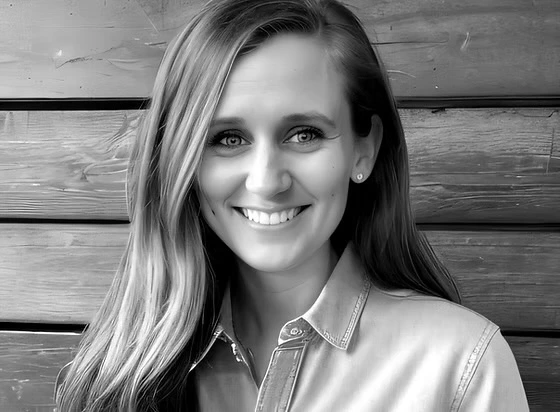
Topic: BPC-157, ACL injury prevention and Nutrition
Guest Name: Dr. Megan Babb
Guest Credentials: Board Certified Physician in family medicine and injury prevention specialist. Master’s in diversity, equity and inclusion leadership.
Discussion Details: Discussed what BPC-157 is and how it helps with the healing process, ACL injuries and things athletes can do to help limit risk and how nutrition/sleep help enhance an athletes performance.
Benefits of Watching: The benefit of watching is to learn about what is new in research in regard to the healing process, ACL and everything that comes with preventing injuries and nutrition tips for athletes to help enhance performance.
Address of Guests Business: 2390 E Bidwell St #300, Folsom, CA 95630, United States
Janae Young: Yeah. Yeah. Sacramento’s been pretty cold lately. But yeah, I just wanted to have you on and talk about a little bit about your business, what you do, and a little bit of how we work together to just service the athletes we work with and just different patients and active lifestyle they have. And I know there’s a lot of new stuff, new research and stuff coming out lately. I’ve had a lot of questions and patients that have asked about BPC 157. That that’s something you offer with your patients and something I just want to know a little bit about just so that I can help explain it to them and they can get some history about it as well. Can you explain what it is first and then how it helps in the healing process?
Dr. Megan Babb: Yeah, of course. So, BPC stands for body protection compounds. It’s a peptide that was originally isolated from human gastric juice and studied for its role in tissue repair and protection. So in simple terms, it helps the body’s natural healing pathways. So what makes it most interesting in especially in orthopedics and sports medicine is its effects on soft tissue healing. So research has shown that what it really does at its core is it promotes something called angioenesis and that is the formation of new blood vessels. So it’s bringing new blood flow to the area of injury. It’s also helping with collagen organization. So it’s helping to repair collagen where it needs it. And then it also reduces inflammation at the injury site. So all of those become critical components of recovery from a muscularkeeletal injury. It’s been studied mainly in animal and pre-clinical models for a really long time now. I think it first started being looked at like in the early 1990s, mainly in Europe. And so I tell patients all the time that while we don’t have what we consider to be largecale human clinical trials, the existing data and realworld clinical experience that we have seen has really made BPC stand out especially in situations where traditional healing has been considered maybe slow or incomplete.
Janae Young: Yeah. And is this a lot of people ask about this too as far as the research behind it and FDA approvals and stuff like that. Is this something that our body naturally produces? This is just helping either speed up the process or overloading your body with something we already produce to help with that process. Is that more so how it works versus taking something like a steroid or something that our body does not actually produce?
Dr. Megan Babb: Yeah. So it’s produced in the stomach when we give it exogenously from an external source like when we give it subcutaneously or their oral versions of it in a pill form. It is a being we’re not using a human version of it. It’s being created by an amino acid synthesizer machine. So it’s a synthetic form of it, but it’s the same formulation of it, but it is naturally produced in the stomach and released in times when inflammatory markers are high. So say for instance I tear my ACL, my body is going to produce inflammatory markers and those inflammatory markers are going to go throughout my body and one of the places it hits is the stomach and then that releases the BPC into production and then BPC is targeted towards the source of that inflammation. And so what we’re doing is we’re just giving people doses of it for a longer period of time to keep it in circulation.
Janae Young: Okay. And then what are the most common because I’ve sent a few patients to you with different diagnosis. What would you say most common diagnosis that you’ve seen pretty good results with for this?
Dr. Megan Babb: That’s a good question. In my clinical experience, I’ve seen the most promising results in patients with tendon and ligament injuries. Things like tendonopathies, partial tears, post-operative peeling, muscle strains, and in athletes that you and I both see a lot of, which is chronic overuse injuries. And these are individuals who haven’t really responded well to rest or physical therapy alone. And it’s important to know that BP7 is used as an adjunct to not in replacement of. So it’s super important that when people are using BPC, it’s usually alongside physical therapists where they’re getting good physical therapy, good rehab, they’re partaking in good nutrition, and they’re focusing on good load management.
Janae Young: Yeah, I’m glad you brought that up with the conjunction because there’s a lot of things that are prescribed to patients, whether it’s a cortisone shot injection or BPC or a steroid for back pain or whatever the case is. A lot of the when you have pain and then you get something that kind of helps with the pain, a lot of people will think, oh, I’m better now, so I don’t have to do anything. when where really it should be used as okay, I’m better now, so now I should be able to strengthen the muscles around the area or whatever the case to help from another shot or needing more. For sure, whatever it is. So, I’m actually glad you brought that up because I see it a lot more in with the cortisone shot that the knee feel better and they’re like, “Oh, great. I’ll just go back to whatever I was.” Yes. So, using that in conjunction is great. The last thing with the BPC is are there any side effects short-term or long-term that you’ve found, whether it’s the research with animals or in any patients you’ve seen? I know you haven’t had a lot of time as far as like being able to see a long-term effect, but what have you noticed or research shows?
Dr. Megan Babb: For me, in like my clinical experience, I find that BPC is very well tolerated in patients. The shorter term effects are really uncommon. I guess if I would have to say something it would be like injection site redness because or injection site discomfort because when it comes to muscularkeeletal injuries I only recommend the subcutaneous version. Oral is a whole other conversation and topic. It’s it is stays nicely in the gut. So it’s great for people who have some gut inflammation. But I would say some injection site irritation. But really to date there’s no strong evidence to suggest there’s any significant long-term adverse effects. But it is important to note and I am very vocal about this and transparent with my patients is that we don’t have any long-term uh human clinical trials to look at and but that’s why patient selection dosing and the application of it for medical oversight is super important because not everyone who walks in my door and says I want BP7 will I give it to because it there’s it’s only going to be effective where we feel that there is opportunity for some good healing. And for some patients, they may be past that. Really, it’s BPC is not going to put a band-aid on someone who needs a knee replacement, right? Or someone who really needs like I tell people like if you tear your ACL, BPC is not going to be the cure all, right? Like you are likely still going to need to have that ACL repaired surgically, but come see me postoperatively and we can help maximize the healing after surgery.
Janae Young: Yeah, but it is important to note that it’s not a one-sizefits-all and there is clinical decision-m in regards to who we give it to and who we don’t. And so when somebody is interested in it, maybe it’s a referral or something, you usually do have them come in and do some kind of eval to make sure they’re a good fit.
Dr. Megan Babb: I for sure 100%. Yeah. Yeah. This isn’t a call me, I want it, and we distribute it. It’s a formal evaluation that still has standards of medical decision-making. For sure.
Janae Young: And then before we get into the next topic, I will say I’m a believer just because I’ve done it myself. I had the need when I started like training for 5ks and 10ks and I did my first 28 days and after that haven’t had any flare-ups after running since and that was probably four or five months ago or so.
Dr. Megan Babb: That’s so good. That’s awesome.
Janae Young: Tell people especially because again it’s not for everybody and it’s not for every diagnosis. So when people give me symptoms similar that I had I’m like it might be something to check and then I away. Okay. And then next I wanted to talk about I know you and your team have a ACL injury prevention program and you guys are contracted with different soccer teams in the area. If a team were to reach out and were interested in that, what all comes with that? And I guess what would be your specialty when it comes to that program and how it makes it different than any other program that might be out there?
Dr. Megan Babb: Yeah, that’s a another really good question. So I believe that as it pertains to injury prevention for all athletes is there’s really two pieces to it. One is the actual application of the doing piece. the you know the plyometrics the strengthening the flexibility and that’s all the stuff that’s like on field right that’s the stuff where it’s done in a gym it’s done in a space the other piece is the education and that I find is where we really create like a full package because it’s similar to the cortisone shot right like a person could come in here and say man I got some knee pain from arthritis and it’s yeah we can stick them with a cortisone shot and that’s going to make them feel great for probably six maybe 12 months Yeah, but it doesn’t treat the underlying cause of it. And so when we really look at ACL in particular, we have to understand the big picture. We have to look at the forest, not necessarily just the trees. And so part of that is identifying the culture of why we’re seeing ACL tears be so predominant in America. Why are we not seeing the same effect in other countries? And so that comes down to, I think, a culture of education and recognizing that America has really taken youth sports to a whole other level. Some good, some bad. Yeah. Yeah. And so what we really offer is a comprehensive opportunity for coaches and clubs and parents and athletes to understand the mechanisms of the body, why ACL’s tear, especially more so for female than for males. The education of why it’s important that like a program like yours, like a performance physical therapy, is so crucial for athletes to stay healthy. A six-week program once a year will probably be enough to help lower that ACL risk. But what we want to help develop and what you and I have talked about a lot with my own kids is a culture of identifying health and that is wrapped up in behaviors that will serve them well into their future beyond athletics. So, when we’re talking about like post-menopausal women and their risk for osteoporosis and their risk for hip fractures, like I want my kids to understand, especially my daughters, like what they can do to help prevent those things when they’re 55 and 60. So, it’s not just a matter of being strong on the field or on the court. It’s a matter of recognizing that there is a whole body of education that can serve individuals to understand the why and how to prevent. And that’s what we do at breaking lines of pressure.
Janae Young: Yeah, that is actually why I even started the performance side of my business actually for that education piece. I felt like as athlete I didn’t have that education. It wasn’t why I took kinesiology courses in college because that was my major. So not everybody else is taking that. Started to learn about the body. You could ask any athlete how many muscles are in the quad? How many different pieces? Even though it says it in the name, but you’d be surprised. I try to ask kids random body questions. I see your whiteboard. Yeah. And you’d be surprised at how many people don’t know the some answers. And I’m like, man, like as an athlete, knowing your body, at least the basics of it should be something you should know because you’re using it and you’re trying to make yourself better as far as performance goes. And outside of PT, the performance side of my business is to like you said to educate really like show show you first of all teach good mechanics and stuff like that, but also explain like what goes with what increase quad strength will help protect the knee, but also hamstring strength. Can’t forget about those because a lot of women and surprisingly a lot of the soccer guys I work with are also very quad dominant. I thought that it was mainly girls, but a lot of them because their quads are so strong, the ratio is just off. And so just just explaining through performance training and some of the testing and just showing that kind of stuff so that you understand what your body is doing and why it’s acting the way it’s acting maybe through injury or whatever else. But as you touched on the increase in ACL tears and how common it is these days, it’s just it’s almost like a rolled ankle at this point like how are absolutely. And what would you say and there’s a lot of reasons and people ask me all the time how to prevent this and stuff like that. What would you say the top three reasons for the increase in ACL tears let’s say the last 10 years?
Dr. Megan Babb: Top three is tough. I know. Yeah, that’s hard. Overtraining sports specialization and probably poor understanding of nutrition.
Janae Young: Okay. Okay. I think uh I think I agree definitely with the overtraining and specialization nutrition. I’m not the specialist there. We’ll touch on that later. But then I would say obviously there’s a tie between mechanics and strength somewhere in there.
Dr. Megan Babb: Yeah. Yeah. The and I think that kind of falls under like this idea of like sports specialization and what that does to the body and how it changes the game for kids. No pun intended, but I don’t think that people really understand the role of what macronutrients and sleep do and therefore like the lack of sleep. And I can’t tell you how many athletes who come in come into my office and they’re not prioritizing sleep. They’re waking up early to do early morning trainings. And if I had a choice, especially in the preubescent puberty years, so especially for girls, so we’re talking about from maybe like the ages of 10 to 14, 15. If you are sacrificing sleep to train, you are not prioritizing things correctly. Yeah. Because what we know is that lack of sleep can actually create deficits in your performance. Yeah. And so it doesn’t matter how much you use that extra time to train, you are creating deficits in what you’re doing. Yeah. And so I think you can also throw in their turf, right? For outdoor sports, we’re seeing an increase for sure in soccer athletes, also for lacrosse players, but we’re seeing also in basketball players. A volleyball player walked in my office last week. Don’t often get ACL tears with volleyball players, but they happen. Yep. So, I think it’s so multiffactorial, but you can’t discount the effects that the culture of youth soccer and sports specialization is doing in America right now. And so, you can’t fight it, right? Because that boat has left. Like, you’re not like you’re not pulling that back in. So what naturally has to change is the culture has to change. And so we have to be better about really focusing on early strength training programs for kids. We can throw out this old theory that kids shouldn’t be late weight training before puberty. That has been debunked. I can’t scream that loud enough. Now, that that goes to say that it’s really important that form and functionality, as with everything in sports, is so important. I do not want a kiddo doing weights who doesn’t know what they’re doing, which is why I always recommend like performance PT, at least to start for kids to get an idea of what proper form and function looks like. But if we don’t change the culture to meet the demand of what youth sports is putting on our kiddos, we are just going to continue to see injuries of all kinds increase.
Janae Young: Yeah. And that’s soccer, just like basketball. There’s really not an off season. I have kids that start AU practice before high school season’s even over, depending on how far they playoffs. And I try to scream from the mountain tops, at least take a week off. Can I just get off? And yeah, you would think that’d be an easy ask, but not even seven days in a row can I get in between seasons for a lot of or if I tell them to take seven days off, they’re like, can I at least do this? And I think that’s just because they’re so programmed that if I skip a day, so and so is going to get better than me.
Dr. Megan Babb: Absolutely. It’s a FOMO.
Janae Young: Yeah. Yeah. That’s just not gonna happen. And I work with now the Christian Brothers High School team. And if the if things were like programmed properly with the right amount of days off, I guarantee less would be more.
Dr. Megan Babb: Absolutely.
Janae Young: Colleges schools took on let me program how things should go. Obviously, practice will happen probably five days a week or whatever, but like when like recovery days or strength training or whatever the case is days, it’ll be just so much better if it if less was more. And so, correct I do with them is and I’ll try to make it out to games and stuff like that so I can really take that information and apply it to the gym. But if I know that like they either had a hard game, maybe they went into double overtime, but they’re supposed to come to me the next day, it’s probably going to be a recovery day. and I change how things go. You know what I’m saying? Because it’s like not everything that you ma might have planned out needs to happen. Like you have to take the body in consideration and how you sail and stuff like that. But yeah, like you said, the ship has sailed with the overtraining because you can’t really miss if you’re trying to get a scholarship. You can’t really take a season off. It’s not just is what it is and butffects your playing time maybe. So now you can’t do it for yourself without somehow.
Dr. Megan Babb: I find myself saying to athletes all the time that if you look at those pitchers who are in the Hall of Fame for Major League Baseball, the majority of them were late bloomers. If you look at someone like Kobe Bryant, Kobe Bryant, you can see his interviews and in his book Mamba and but he talks a lot about how he really struggled up until about the age of 17, right, where he’d go to these basketball camps and he was not a standout. Like he was on the struggle bus a little bit until he really got through puberty and then really filled out and then really focused and honing on the basics. You see the same thing with Alex Morgan. Alex Morgan didn’t pick up a soccer ball until she was a teenager. So, we have examples of these like really elite athletes who didn’t have it all figured out by the time they were 12, right? Not everyone is a LeBron James who’s just like gifted athlete from the get-go, right? Like he came out of the womb probably dribbling a basketball, but those individuals don’t exist. Michael Jordan in Exactly. Right. In freshman year. Yeah. So it’s it the thing is that the hard part is that it’s taking the culture and recognizing that this is again no pun intended a marathon not a sprint. And so you have to extrapolate years of experience. Whereas where parents and kids are like stuck in this moment of I’m not making the first team or I’m on the first team, I’m getting dropped to the second team. And it’s like all of those experiences will create this accumulation of what your path looks like. And I am of the strongest belief that any child who truly wants to become a professional athlete will because they will recognize the work that it takes. Most of the time it’s not the lack of skill that doesn’t allow someone to make it. It’s the work.
Janae Young: Yeah. When push comes the shove, no one really wants to put in that work because it’s a lot of work. And I was a division one athlete and I know it was tough. And I was amongst a small population of kids who went on to play in college. Now think about the population of kids that I played with who then went on to become pro. That’s even smaller, right? Like you have better odds like of winning the lottery than you do becoming a professional athlete. And while I don’t want to decipher anyone’s dreams, the reality is that you have to recognize that like when a kiddo says, “I want to be a professional soccer player when they’re eight.” We can’t always necessarily as parents expect to hold our children to that. Like we they’re allowed to change their mind. Yeah. They’re allowed to decide actually I don’t really want to play at this level anymore or I do. And if they do, they’re going to put their butt in gear. It’s just parents who have to shuttle their kid across the this the finish line. That’s not a kiddo that’s gonna make it. Like it’s just it’s that simple. And so go and have Yes.
Dr. Megan Babb: They got to want it themselves. They got to want to get up at 5:00 a.m. and do a workout or whatever the case is. But also they want to they have to want to learn about their body to know that’s their money maker. I think absolutely. You tear ACL and you’re out for a season, that opportunity you have may not be there next year or Yeah. it may not be or whatever the case is. And that’s why injury prevention with you have the performance stuff I do is so important. But a lot of people don’t see the benefit of it until after they’ve been injured. And that’s what I a lot of as far as like proper warm-up like you said, proper sleep, proper nutrition. They don’t take that in consideration until after. But after those opportunities may not be there. You might have missed your train.
Janae Young: What’s so funny is that the most common parent that comes into my office were division one athletes or professional athletes.
Dr. Megan Babb: Yeah. So, they already know. They know. They know how important the work is now. And that’s why my kids come to you, right? Because I know like I would rather my kids be in your gym than out on the field with a soccer ball like every day of the week and twice on Sundays. If I had extra time, it would be with you because I know the benefit of what that does for them now and for their future.
Janae Young: Yeah. And I say that a lot with basketball stuff when I’m trying. I run into this with scheduling once like season starts too because it is very important to lift during season more probably more important because you did all this work in offseason maybe offseason because there’s not really one of those. Not really one. But then basketball season, say for high school starts, you did all this work, you got stronger, and then that that muscle mass doesn’t just stay there. You’re probably going to start decreasing muscle mass within two weeks. You’re going to peak and that’s like preseason. You’re not even at Yeah. So, keeping that strength throughout the season is so important. And so, when I’m talking to to athletes, I’m like, “Okay, let’s look at your schedule, see where you can get in.” They’re like, “I have a shooting practice at this time, regular practice at this time, another skills training, a ball handling training at this time.” I’m like, “But all those trainings are the same type of training. There needs to be just like with your retirement, there needs to be diversity in what you on, right? You can’t just have everything in the same lane. It can’t be all soccer workouts or all whatever. You’re putting strength training on the back burner.” So, that’s that I’m glad you brought that up because that’s something I talk about all the time with scheduling. I’m like, there got to be a day you can skip a shooting workout and do stuff.
Dr. Megan Babb: Yeah. Yeah. Because the other thing is that all that stuff, guess where they can do that? On their own. On their own. In their garage, in their backyard, like in at the at the park. Yeah. Yeah. Like they can be doing that at recess or they don’t need necessarily someone to structure it. And I think part of it is like we’ve lost a little bit of creativity because it’s oh I have to have a I have to have a person who’s a professional in ball skills to tell me what to do. It’s what happened to go taking a ball and like just dribbling in your garage or like just go in and doing layups at the school. But your expertise is a very unique expertise that you just cannot get. You can’t chat GBT it. You can’t even YouTube is not going to be sufficient enough. Right? because you and I both know how important just the slightest subtlety of the inward knee knock is or like the loss of function in the glute like those things matter and having that conversation in education with parents like they they get it for me when I’m in here and I and it’s are you in performance PT? No, you’re not. That needs to be your next step. like regardless of what the injury is or whether they’re seeing me for injury prevention like you have to be involved in physical therapy like that the level of eye of detail that you guys have that you your acumen for that is so impressive so impressive that I like wish that I’d also like had that level of ex education in my medical training to be able to see that kind of stuff.
Janae Young: Yeah, for sure. But you just can’t stress the importance of it. Yeah. Yeah. And honestly, I feel like we can talk here all day, but I do want one more question that’s pretty important that my athletes are asking me about all the time, and I know you specialize in this as well, the importance of nutrition, and we’ve talked about it a little bit. Yeah. Word nutrition and performance goals and reaching their goals. What would you say, because we’ve touched on it a little bit with sleep and stuff, but what would you say the most important thing would be when it comes to nutrition? Maybe somebody can’t get a full meal plan made out, but what would you say the most important thing when it comes to nutrition and either tracking or paying attention to and their performance?
Dr. Megan Babb: I would say planning ahead is key because a lot of times, and this is true for all Americans, like we tend to let what we eat become a secondary thought. And so oftentimes we will reach for something when we’re really hungry and it might not be something that really serves us very well. So planning out snacks is crucial. And so like the basic rule of thumb, and this is very like basic idea, but it can just still build like a foundation is three meals really focusing on protein. Like breakfast, lunch, and dinner need to be rich with protein. And so if you can get 30 grams of protein in three times a day, like I’m happy. And yes, we can go into the nitty-gritty of like protein sources, but at the end of the day, like if you’re at lunch at school and they’re serving like tater tots and pizza and you have a protein shake, then that takes the guessing away. Like drink that protein shake, eat what they’re serving for lunch. But the three squares a day of getting good protein is crucial. And protein is going to be so important for muscle rehab and recovery. Yep. Then second to that is going to be your carbs. And I like the idea of power snacks, energy snacks, and recovery snacks. So a power snack is going to be like a carb loaded, something that you’re going to eat a couple hours before an activity. A energy snack is going to be something that you eat right before. So whether it be like an applesauce or maybe a granola bar or a serving of Goldfish crackers, like I don’t really care what it is. Just something that you’re going to get like maybe 30 to 60 minutes before your workout. Especially for kids who are like so busy they’re going for school freight to practice. Something you can eat in the car. Yeah. And then a recovery snack is going to be something that you can consume after a practice that gives you a carb load. So ideally you may be looking at three good meals a day balanced with protein and a minimum minimum of two snacks a day. And if anyone is skipping breakfast and they’re an athlete, like we can have words because like you cannot skip breakfast and still get the amount of protein that you need in a day. Yep. Like I don’t Breakfast is not a special meal. It just is so important because it serves as an opportunity where you’re unless you’re a swimmer because swimmers usually train in the morning. It gets you the furthest away from your activity. So, it’s like the best time to really consume a high protein something nice. So, I would say planning crucial. So, the weekend before, plan out all your meals, plan out all your snacks so the guessing game is done. And then from there is making sure that you’re hitting at least 30 grams of protein three times a day and hitting a good kind of rule of thumb could be like a gram of carb per minute away. So if you’re two hours away you could have 60 anywhere from 60 to 120 grams of carb. If you’re 30 minutes away you can have about 30 grams of carb. So that kind of serves as a little bit of a failafe yeah method. And then from there I like god my athletic nutritionist consults like those people are just as important to me as my physical therapy colleagues. And so having for anyone who is really trying to optimize and really trying to play at like a Stanford or UCLA and they’re really trying to get at it then by the age of 14 15 you’ve got to be seeing someone or at least dialed into your nutrition. like mom or dad can’t be doing your nutrition for you at that age. Like you have to have it dialed in yourself.
Janae Young: Yep. And then before we get out of here, if somebody wanted to find you, whether it was for BPC, whether it’s for a nutrition consult or the ACL injury prevention, where can they find you at?
Dr. Megan Babb: So they can find us at either thriveprimarycare.net. That’s where I do all my inoff consultations with my primary care practice. or if it’s a club coach and they’re wanting like education or any of our injury prevention programs, they can find me at breaking linesofpressure.com.
Janae Young: Perfect. Thank you for being on here with me. Thank you for taking the time out. We’re running up.
Dr. Megan Babb: Oh, thank you. And hopefully we talk in the future another podcast because I think we could probably talk about ACL’s or nutrition all day long.
Janae Young: So, I know. And that’s it. I’ll talk to you later.
Dr. Megan Babb: Awesome. Thanks, Jana. going to take care